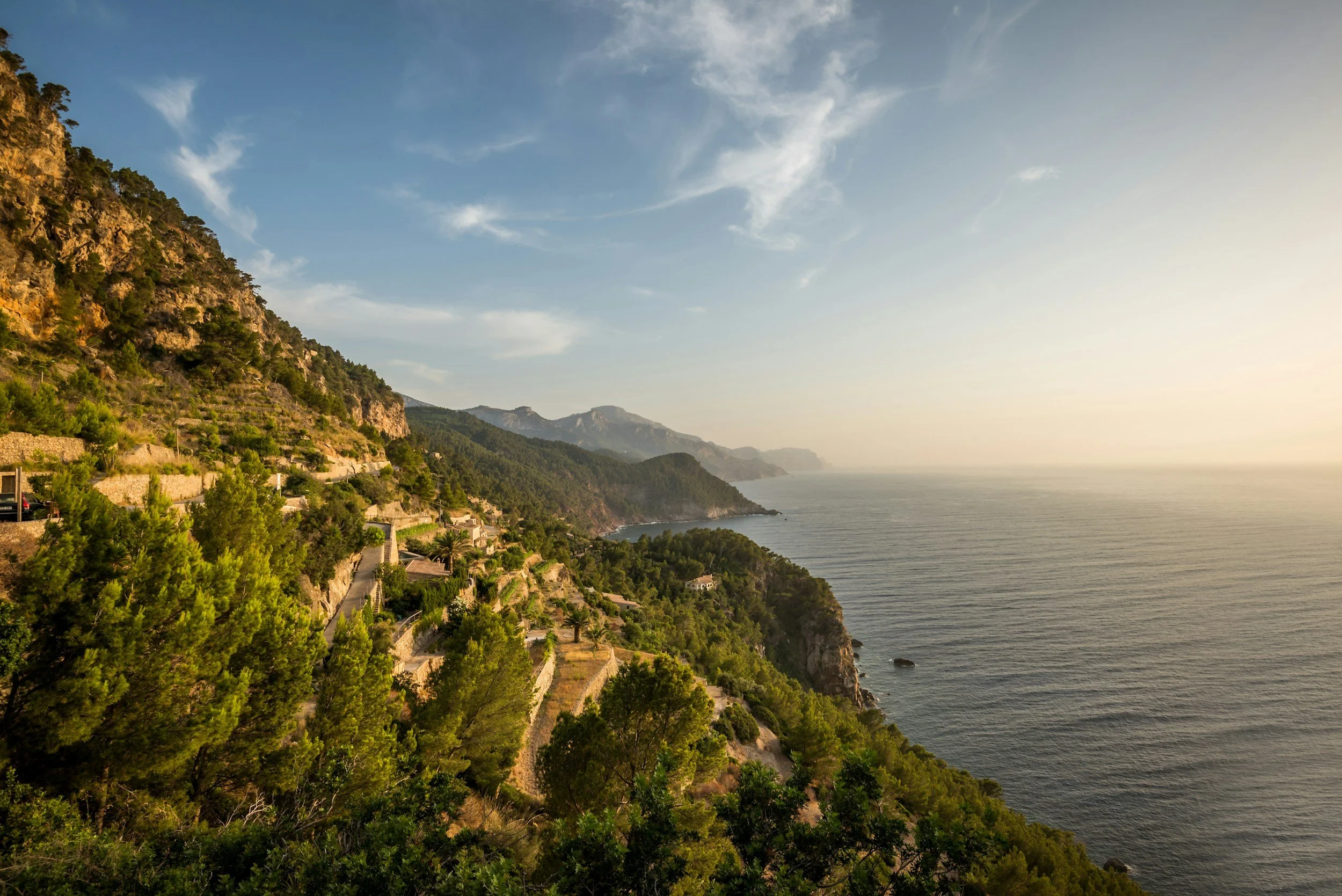
Why choose Costa Blanca, Spain for my next cycling vacation?
Costa Blanca is a premier cycling sanctuary where diverse terrain meets an idyllic climate of over 300 days of sunshine per year. From sun-drenched coastal routes to a high-altitude interior of limestone peaks, almond groves, and ancient terraced valleys, the region offers routes that masterfully blend challenge with scenery. It is why many World Tour pro teams make this their winter training base; the impeccably maintained roads, a deep-rooted culture of respect for cyclists, and specialized infrastructure create a vibrant atmosphere where every ride feels like a professional stage.
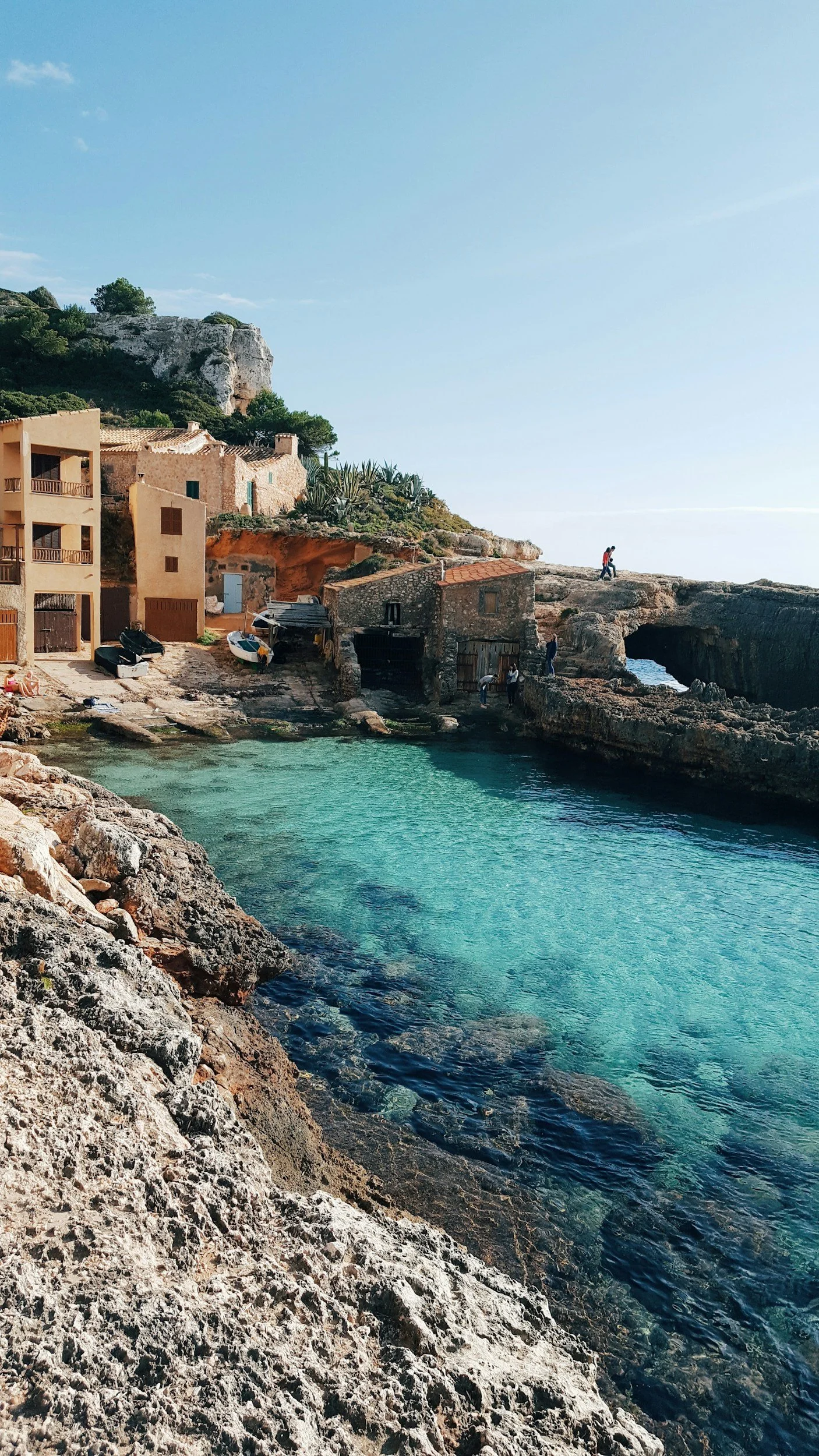
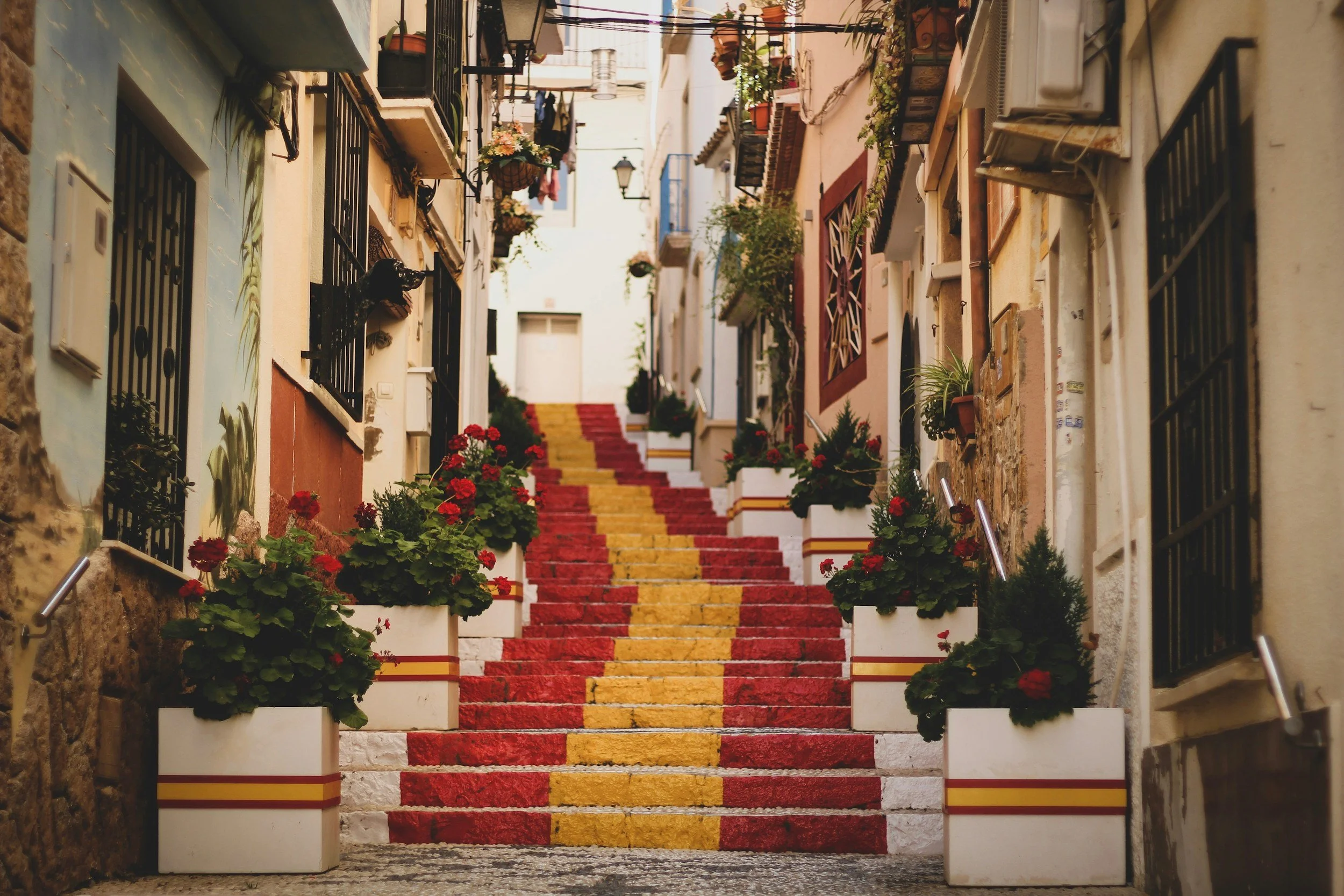
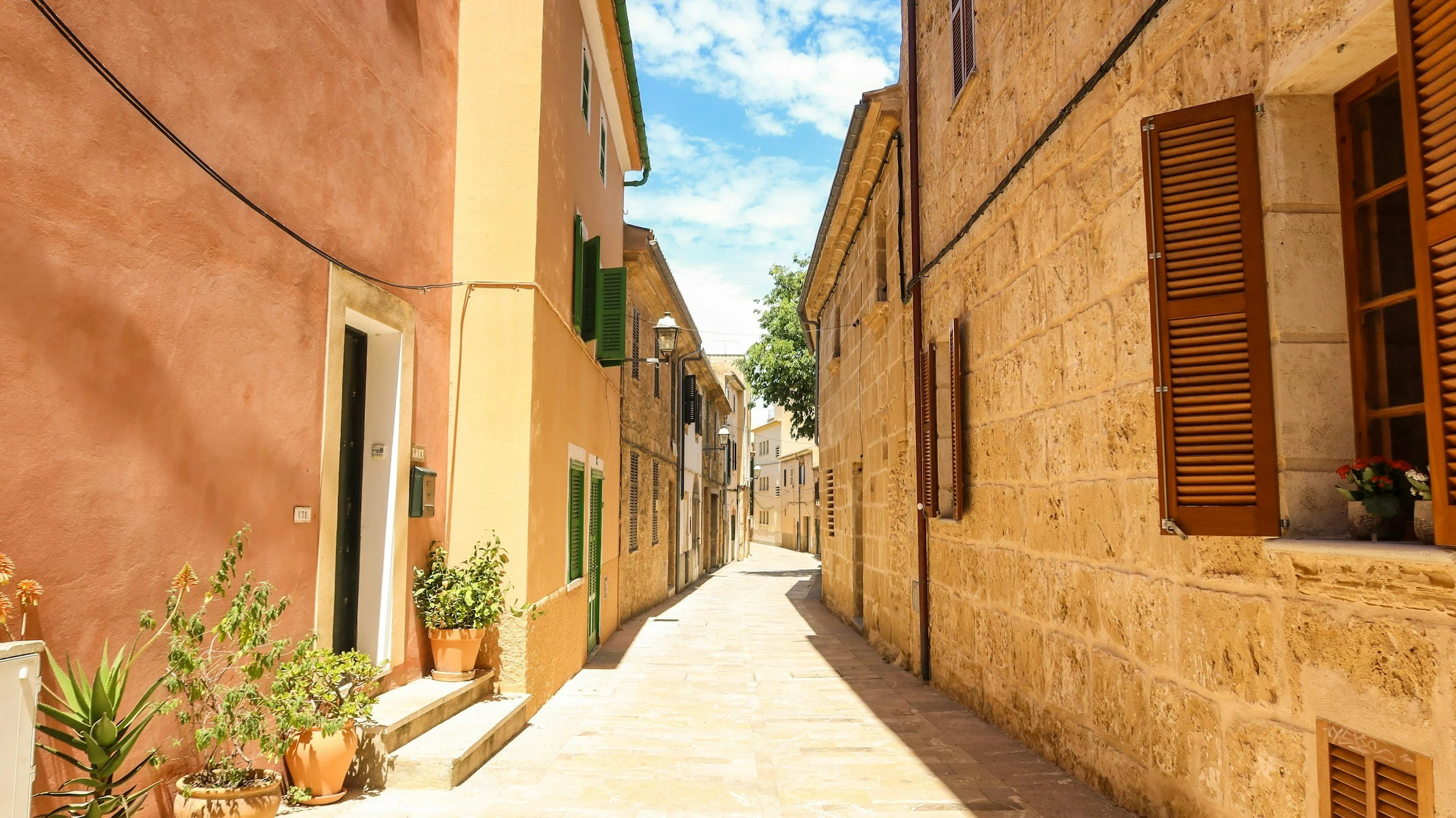
Join us in Costa Blanca, Spain
Costa Blanca: The Mediterranean’s Cycling Sanctuary
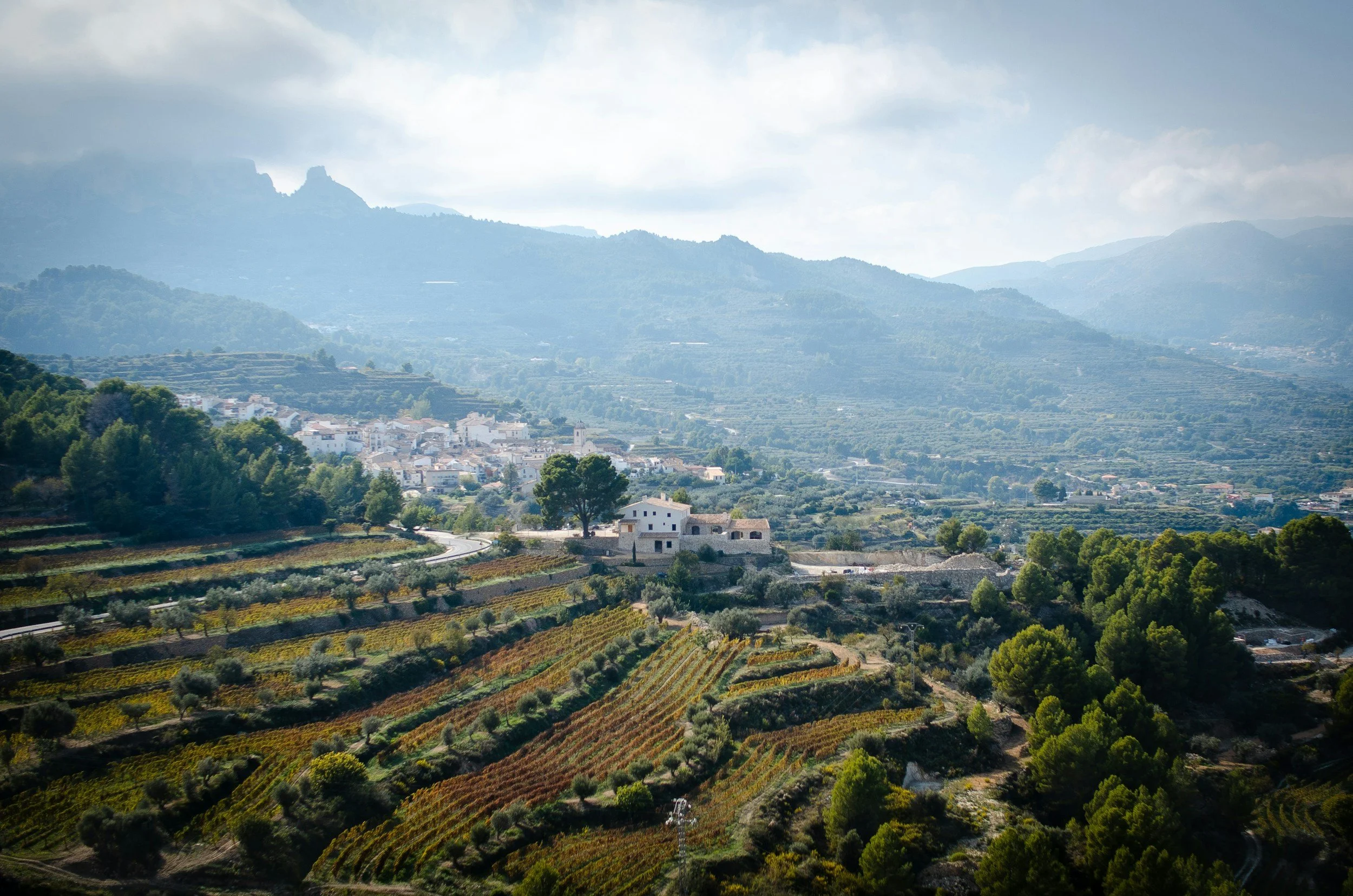
Diverse Terrain
Cycling in Costa Blanca transitions seamlessly from coastal flats to the rugged, high-altitude peaks of the Alicante mountains. Riders can enjoy rolling terrain along jagged cliffs and tackle legendary WorldTour training grounds. This landscape is defined by its impeccably smooth asphalt and a labyrinth of quiet secondary roads that wind through lush valleys, deep limestone canyons, and alpine-style switchbacks. Whether you are looking for a steady "coffee ride" through the Jalón Valley or a grueling 2,000-meter climbing day in the Sierra de Aitana, the region provides diversity and a visual variety that is unmatched in Europe.
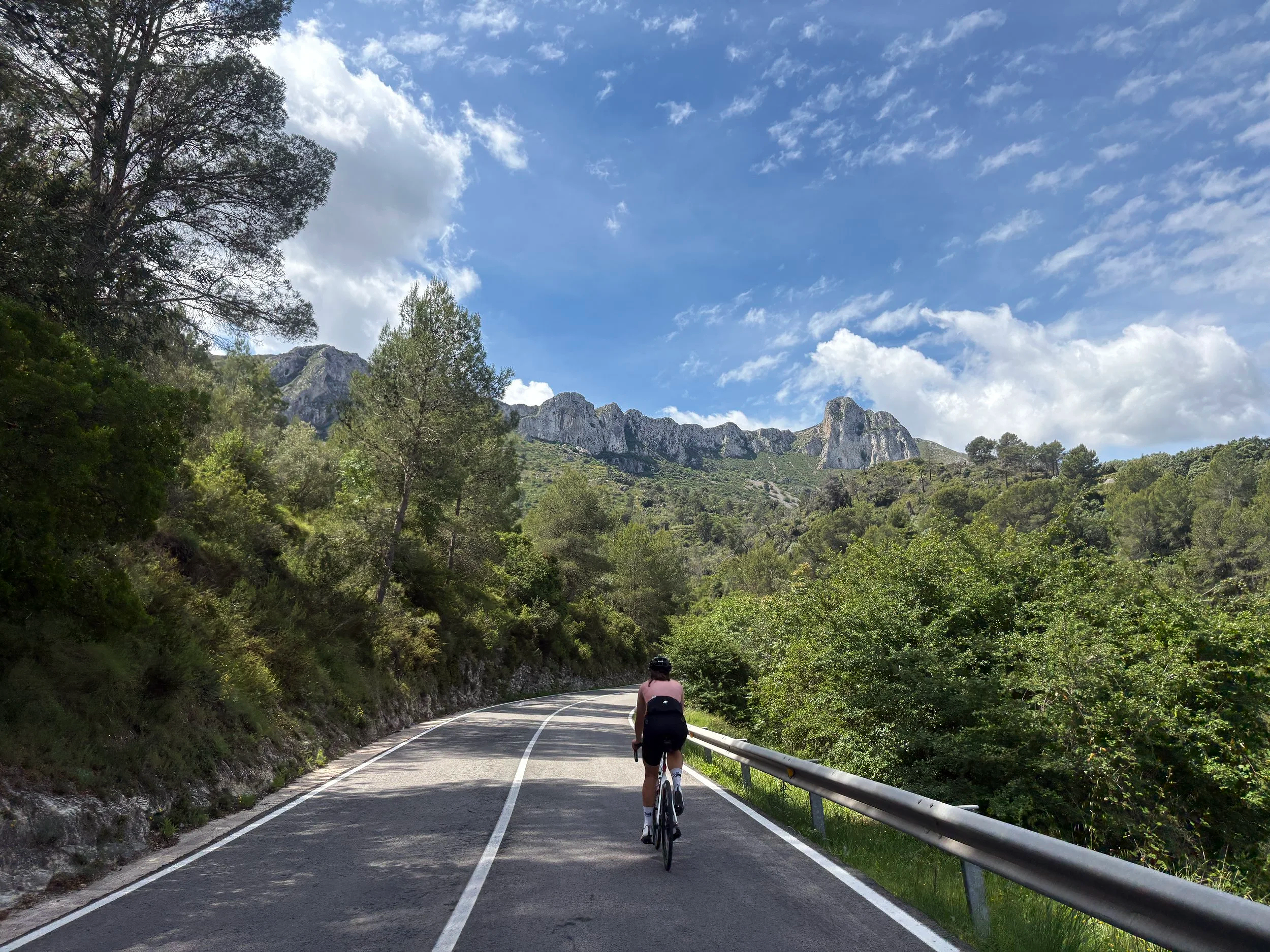
Prime Road Quality
The road surfaces in the Marina Alta region (the CV-700 series roads) are famously "glass-smooth." Local authorities prioritize resurfacing these secondary mountain roads, which allows for high-speed, confident descending and reduced rolling resistance during long 3,000m+ climbing days.
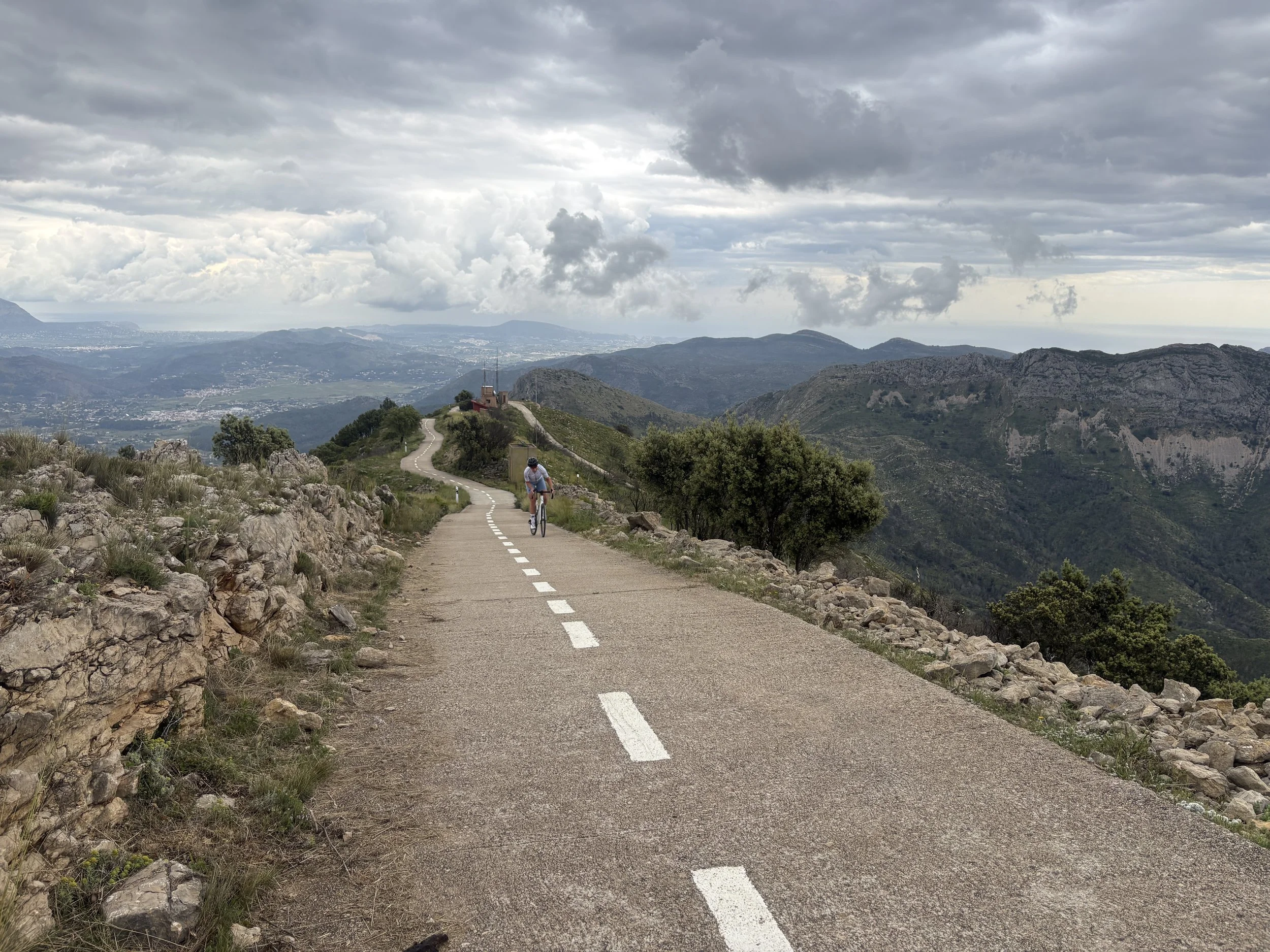
Professional Training Ground
The Jalón Valley serves as the unofficial winter home for the UCI World Tour. Teams like Alpecin-Premeir Tech, Red Bull–BORA–Hansgrohe, Visma-Lease a Bike, Lidl-Trek, and FDJ-Suez use these exact roads for their pre-season camps because the local culture invites and supports a widespread cycling culture; drivers are exceptionally patient and usually give riders several meters of space when passing.
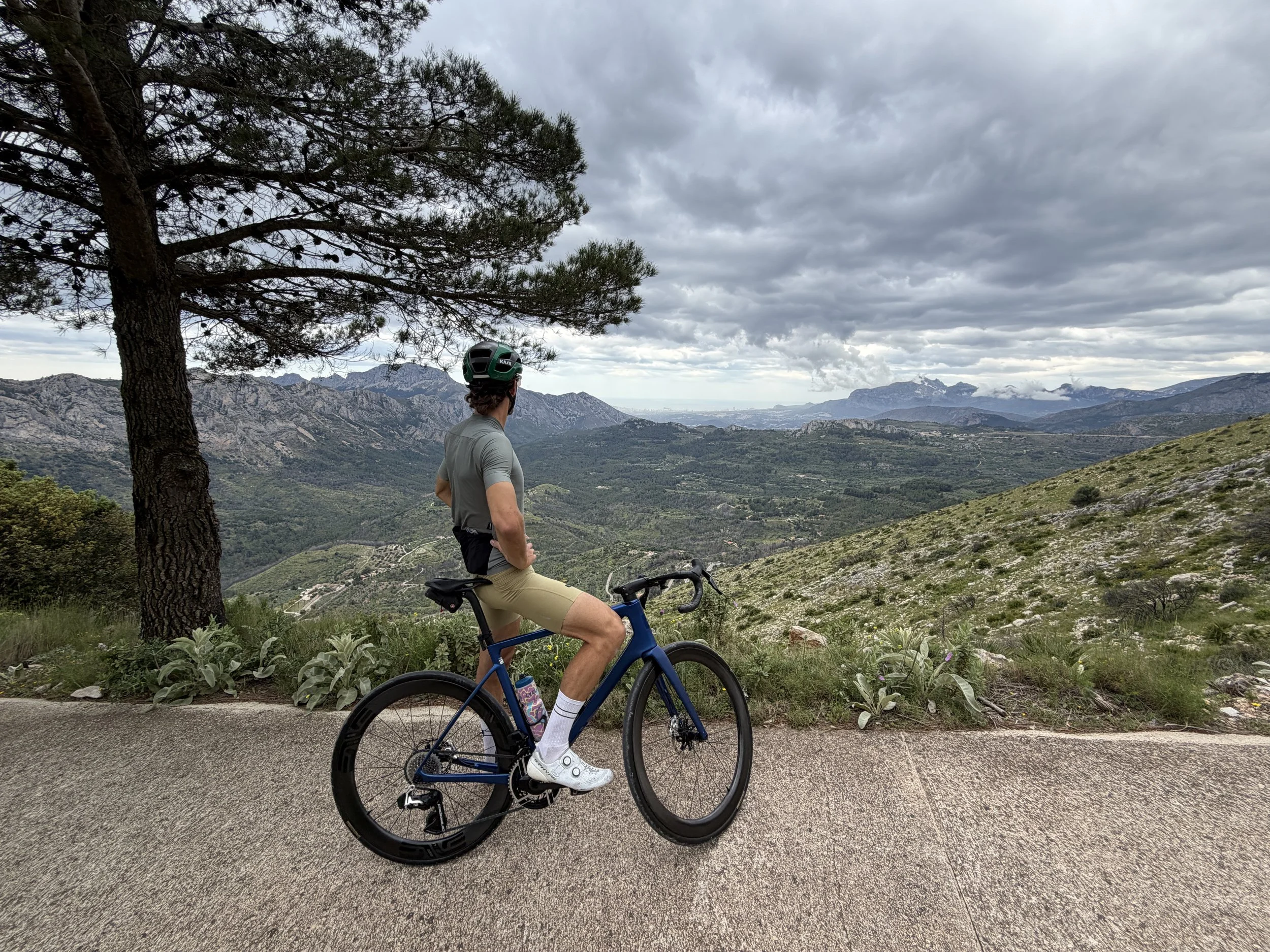
The Microclimate Shield
The surrounding mountain ranges (Bernia and Aitana) act as a barrier against weather fronts from the Atlantic. This creates a dry, stable microclimate with over 300 days of sun per year. Even in January or February, temperatures in the valleys typically hover around 16–18°C (60–65°F), which is ideal for high-intensity training without overheating.
Cyclist-Friendly Infrastructure
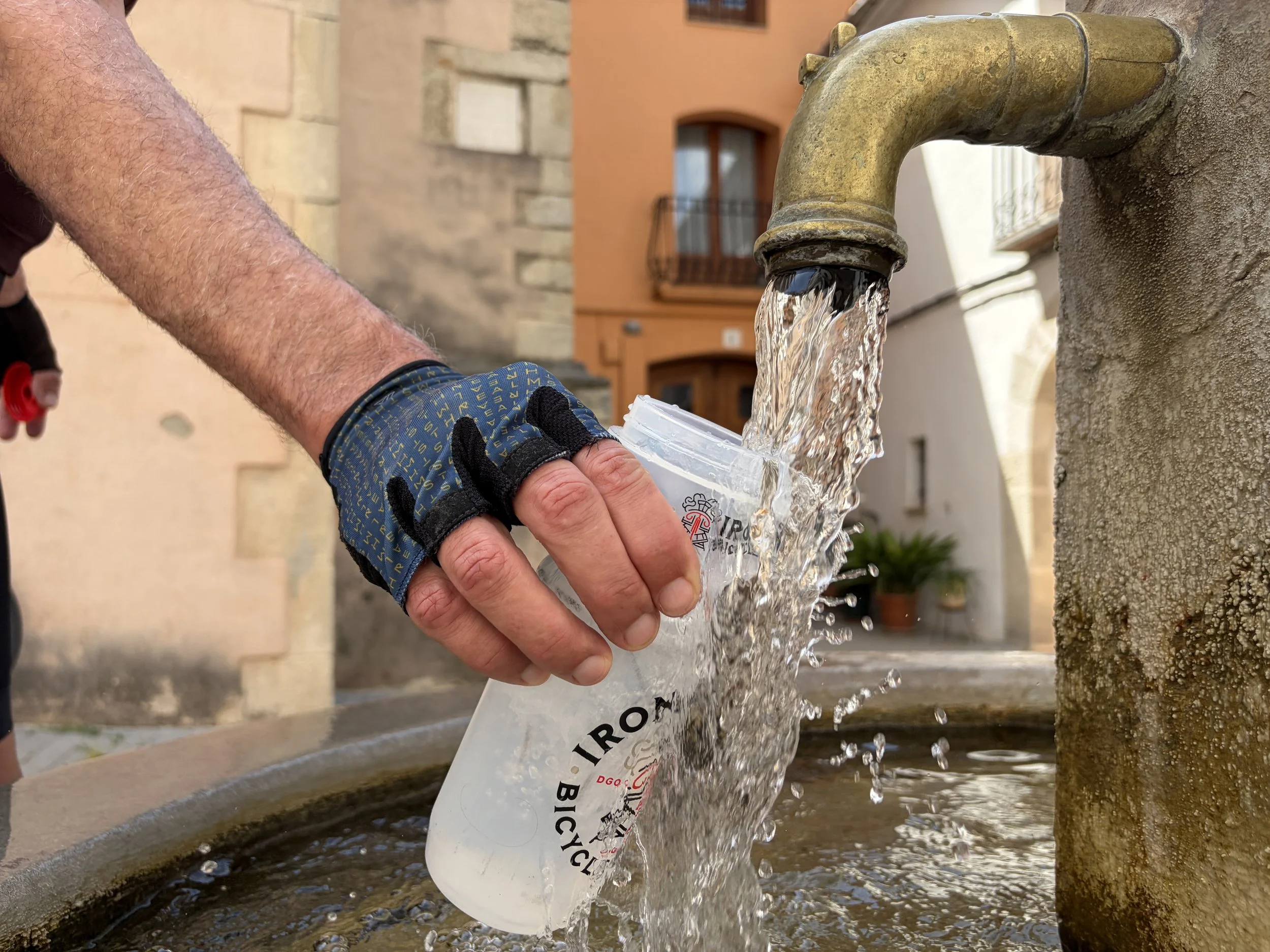
Because of the volume of riders, the infrastructure is tailored to the sport. Almost every village square has a "Fuente" (fountain) with potable mountain spring water. Additionally, cyclist cafe-culture is prevalent with cafes that cater specifically to riders with secure racks, a pump on hand, CO2 cartridges, and high-quality nutrition.